






- The suspension system is one of the most important components of driving comfort and road safety. Shock absorbers, control arms, springs, and connection components directly affect both the vehicle’s road handling and driving quality. In this article, we will examine in detail the function of the suspension system, the importance of its components, and how proper maintenance contributes to driving safety.
1. The Function of the Suspension System
The suspension system connects the vehicle body to the road. Its main function is to absorb impacts from the road surface and maintain vehicle stability.
-
Improves road handling.
-
Provides driving comfort.
-
Reduces braking distance.
-
Maintains vehicle balance.
The suspension system is the invisible hero of safe driving.
2. Shock Absorbers – Impact Dampeners
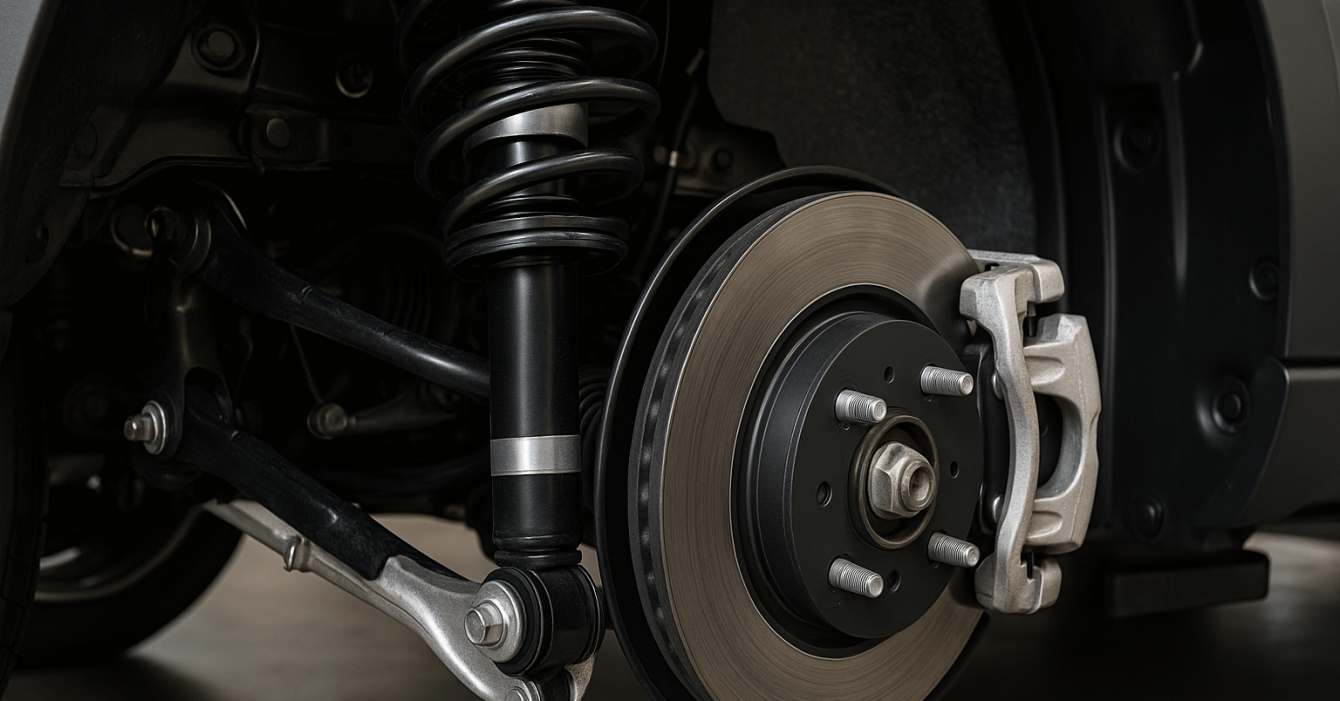
Shock absorbers absorb vibrations from the road surface and keep the vehicle balanced.
-
Worn shock absorbers can cause swaying during cornering.
-
High-quality shock absorbers improve both comfort and safety.
-
Replacement is generally required within the range of 80,000–100,000 km.
3. Springs – The Foundation of Road Connection
Springs are one of the most important components of the suspension system.
-
Coil springs are commonly used in passenger vehicles.
-
Leaf springs are suitable for carrying loads in commercial vehicles.
-
Weak springs cause the vehicle to get closer to the ground and create friction.
4. Control Arms and Bushings – Balance Components
Control arms stabilize the contact between the wheels and the road.
-
Durable control arms provide proper steering control.
-
Worn bushings increase road noise and cause vibrations.
-
Regular maintenance can extend the lifespan of these components.
5. Sway Bars – The Hidden Safety Component
Sway bars prevent the vehicle from leaning during cornering.
-
Provides stability during sharp turns.
-
Used thicker in performance vehicles.
-
When faulty, the vehicle becomes unstable during cornering.
Sway bars are hidden heroes that provide safety without the driver even noticing.
6. Symptoms of Suspension Failures
Signs indicating problems in the suspension system:
-
The vehicle leaning to one side or pulling left/right.
-
Steering wheel vibration.
-
Uneven braking.
-
Increase in road noise.
7. The Importance of Suspension Maintenance
If suspension components are not checked regularly, they can create problems in terms of both safety and cost.
-
Inspections should be performed every 20,000 km.
-
If worn components are replaced early, high repair costs can be prevented.
-
Original parts should be preferred.
8. Future Suspension Technologies
Suspension trends after 2025:
- Electronically controlled shock absorbers.
- Widespread use of air suspension systems.
- Smart sensor systems → automatic adjustment according to road conditions.
- Adaptive suspensions designed for autonomous vehicles.
It is generally recommended to replace them every 80,000–100,000 km.
Steering wheel vibration, unstable driving, and leaning during braking are the most obvious signs.
The vehicle becomes unstable during cornering, and the risk of skidding increases.
Air suspension provides comfort, while traditional spring suspension is more durable.
If regular maintenance is not performed, both vehicle safety decreases and premature wear occurs in other components.